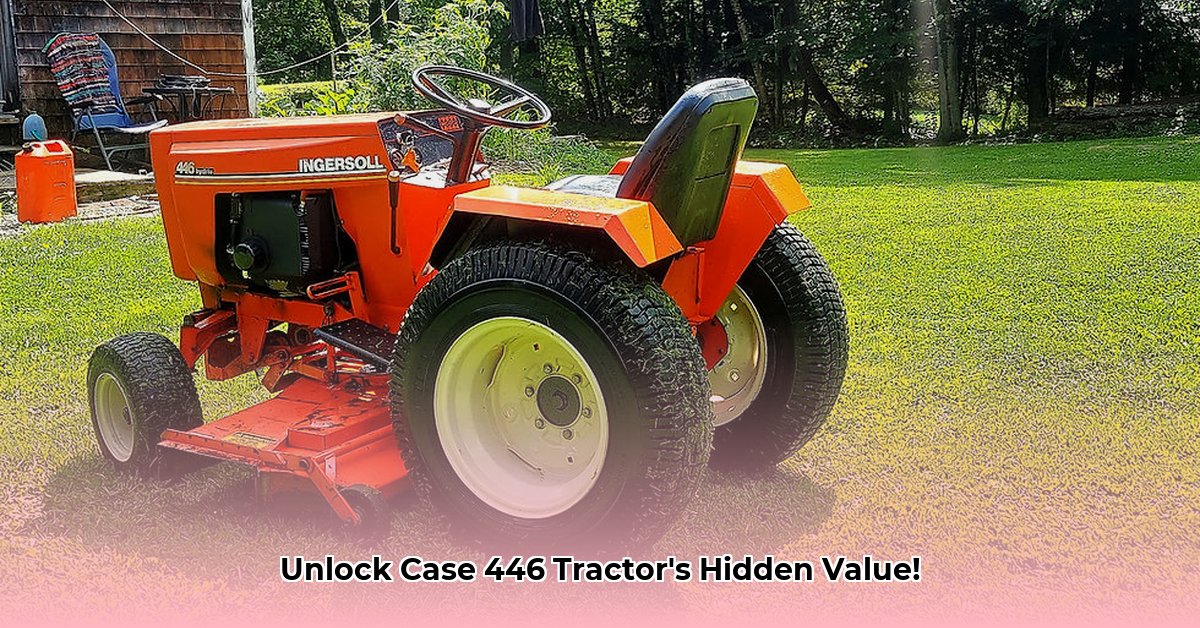
Finding the right price for a used Case 446 tractor requires careful research and a keen eye. This guide provides a comprehensive approach, empowering you to negotiate a fair deal whether you're buying or selling. Understanding the key factors influencing value is the first step towards a successful transaction. For detailed Case tractor specs, see this helpful resource: Case Tractor Specs.
Factors Affecting Case 446 Tractor Value
Several key factors determine the value of a used Case 446 tractor. These factors interact to create a final price, and understanding each is crucial for making an informed decision. Remember, a seemingly minor detail can significantly impact the overall value.
Year of Manufacture: Older tractors (e.g., those from the 1970s) generally depreciate more rapidly than newer models. This is due to age-related wear and tear and the potential difficulty in sourcing replacement parts.
Hours of Operation: Lower operating hours indicate less wear and tear on the engine, transmission, and other vital components. Think of it like mileage on a car—a tractor with fewer hours will generally command a higher price. But beware: low hours don't guarantee perfect condition.
Condition (Mechanical & Cosmetic): A well-maintained Case 446, both mechanically and cosmetically, is a more desirable asset. Rust, dents, and significant mechanical issues will negatively affect its value. A thorough inspection is critical.
Attachments Included: Additional implements such as a loader, snow plow, or backhoe significantly increase a tractor's versatility and value. Buyers often pay a premium for a ready-to-work package.
Maintenance History: Detailed maintenance records demonstrating regular servicing and repairs instill confidence in a buyer, positively impacting the tractor's perceived value and reliability.
Market Trends (Regional Variations): Supply and demand influence tractor prices. Regional variations may significantly impact the price. A Case 446 might fetch a higher price in an area with high agricultural demand.
Modifications/Upgrades: High-quality aftermarket improvements, such as engine upgrades or enhanced hydraulics, can increase a tractor's value. However, poorly executed modifications might have the opposite effect.
How to Research Case 446 Tractor Value
Thorough research is essential for determining a fair price. This step-by-step guide helps you navigate the process effectively. This systematic approach helps eliminate guesswork and maximizes your chances of a positive outcome.
Step 1: Online Research (Auction Sites & Forums): Begin your search on reputable online auction sites like TractorHouse or Machinery Pete, and explore relevant agricultural forums. Look for recent sales of comparable Case 446 tractors—note their specifications and selling prices. This provides a valuable benchmark.
Step 2: Consulting Local Dealers: Contact local Case IH dealers for insights into current market values in your region. Dealers possess up-to-date information on regional prices and can provide valuable context.
Step 3: Comparable Sales Analysis: Identify three to five recently sold Case 446 tractors with similar specifications (year, hours, condition, attachments). Compare these sales to establish a realistic price range for your target tractor.
Step 4: Pre-Purchase Inspection Checklist: A thorough inspection is crucial, especially when buying. Use a detailed checklist (see below) to assess the tractor's condition, identifying potential issues that could affect value. This hands-on assessment is indispensable.
| Item | Inspection Points | Notes |
|---|---|---|
| Engine | Leaks, unusual noises, smoke, compression test results | Assess for wear and potential future repairs. |
| Transmission | Smooth shifting, leaks, responsiveness | Check for grinding, hesitation, or other signs of damage. |
| Hydraulics | Leaks, proper function of lift and other systems | Thoroughly test all hydraulic functions. |
| Tires | Wear, damage, proper inflation | Note tread depth and any signs of damage or improper inflation. |
| Electrical System | Proper function of lights, gauges, etc. | Check all electrical components and wiring. |
| Body/Frame | Rust, dents, damage, structural integrity | Evaluate for corrosion, significant damage, and overall structural integrity. |
| Implements (if any) | Condition, functionality, wear and tear | Assess the condition and functionality of all included attachments. |
| Maintenance Records | Regular servicing, documented repairs | A complete and well-maintained history is a significant asset. |
Negotiating a Fair Price: Achieving a Win-Win
Armed with your research, you're ready to negotiate. Remember, a confident approach grounded in solid information is your greatest advantage.
Set a Realistic Budget: Determine your maximum budget before negotiations begin. This prevents emotional decisions during the process.
Assess Seller Motivation: Understanding the seller's reasons for selling can inform your negotiating strategy. Are they motivated to sell quickly?
Make a Reasonable Offer: Base your offer on your research, adjusting for any identified issues during the inspection. Be prepared to justify your offer.
Be Prepared to Walk Away: Don't be afraid to walk away if the seller's price is unreasonable. There are always other opportunities.
Conclusion: Maximize Your Case 446 Investment
Buying or selling a used Case 446 tractor requires diligence. By following this comprehensive guide, you gain the knowledge and tools to make informed decisions, ultimately maximizing your investment. Remember, thorough research and careful inspection are key to securing a fair and successful transaction.